
TECH, WRITING & INNOVATION
Tech, Writing & Innovation is a rapidly evolving space where ideas, technology, creativity, and communication intersect to shape modern culture, industries, and digital experiences. It brings together writers, developers, strategists, researchers, innovators, and digital creators who transform information into impactful systems, stories, platforms, and solutions. From artificial intelligence and product development to research-driven communication, digital storytelling, and creator-led ecosystems, the industry thrives on adaptability, interdisciplinary thinking, and the ability to simplify complex ideas into meaningful human experiences.
As digital transformation continues to redefine how people work, learn, and connect, individuals within this space are expected to constantly evolve alongside changing technologies, audience behaviour, and innovation cycles. The rise of independent creators, knowledge-based communities, and scalable digital ecosystems has created immense opportunity, while also demanding originality, strategic thinking, and sustainable systems for long-term growth. CTB recognises the evolving realities of this landscape and supports creators, thinkers, and innovators in approaching their journey with greater clarity, direction, and professional awareness helping ideas move beyond experimentation into purposeful and lasting impact.
“Innovation is not just about creating what’s next, but understanding how to shape what lasts.”
XR, Spatial Tech and the IP Questions Creators Need to Ask
The way films, brand experiences and live shows get made is changing fast, and most of that change is happening quietly, on set, before anyone in the audience notices. Projection mapping, LED volumes, motion capture and immersive tech are no longer niche. They're becoming part of how Indian entertainment gets built. And with new technology comes a set of IP questions that most people in the room haven't had to think about before.
What's Actually Happening
Projection mapping turns a wall, a stage or a building into a moving visual, using projected light rather than a screen. It shows up at weddings, launches and live shows across India already.
LED volumes are the bigger shift. Instead of a green screen, productions now use a wall of LED panels playing a real-time digital environment, synced to the camera. The actor stands inside the world instead of imagining it. Annapurna Studios and Qube Cinema have already built one in Hyderabad, and the Indian government has backed the Indian Institute of Creative Technology in Mumbai to build this out further. Films like Adipurush, Brahmastra and RRR have all leaned on this kind of digital-environment workflow. It's still early days for most Indian productions, mainly because of cost, but the direction is clear.
Sensor-based interaction covers motion capture, depth sensors and haptics, anything that reads a performer's or a viewer's movement and feeds it back into a digital system live. This is what drives mocap-based CGI characters and interactive installations, and it's moving from experimental to mainstream fast.
VR, AR and XR sit on top of all of this. VR is a fully enclosed digital world through a headset. AR overlays digital content onto the real world. XR is the umbrella term for both. Underneath all of it is the same layer of tooling, usually a 3D engine like Unreal or Unity, which is why these terms tend to get used together.
Why This Raises IP Questions?
Every layer of this creates a different kind of intellectual property, and ownership doesn't automatically sit with whoever paid for the production.
The 3D environment or digital set built for an LED volume is a copyrighted work in its own right, separate from the film shot in front of it.
Custom software or a new rendering method built for a project can carry its own copyright, and in some cases, patent potential.
Hardware design, the LED rig, the sensor system, sits under patent and design law, not copyright.
Motion capture performance raises a genuinely unsettled question in India: the performer holds personality rights over their likeness and movement, but who owns the resulting digital animation depends entirely on what the contract says. Indian law doesn't hand this over automatically.
The finished experience, the show, the installation, the sequence, is usually a compilation or derivative work, and it's only cleanly owned by the producer if every underlying piece feeding into it was properly licensed first.
The mistake we see most often: everyone assumes ownership defaults to whoever commissioned or hosted the work. In practice, Indian copyright law only recognises that in specific, narrow circumstances, mainly direct employment. Independent creators, technology vendors and performers retain rights unless a contract explicitly assigns them. On a production that pulls together a software vendor, a set designer, a hardware supplier and a cast, that means ownership is fragmented by default, not unified.
What This Means in Practice?
If you're commissioning, building or performing in one of these projects, it's worth knowing the answers to a few questions before anything gets shot:
Who owns the environment or set once the project wraps?
Does the software or hardware you're using actually permit the commercial use you have planned?
What happens to a performer's captured movement and likeness after the project ends, and can it be reused?
Who owns the recording of the finished installation itself, separate from the installation?
These aren't abstract questions. They're the kind that decide whether a follow-up project, a licensing deal or a dispute five years from now goes smoothly or turns into a mess.
WRITERS & BLOGGERS
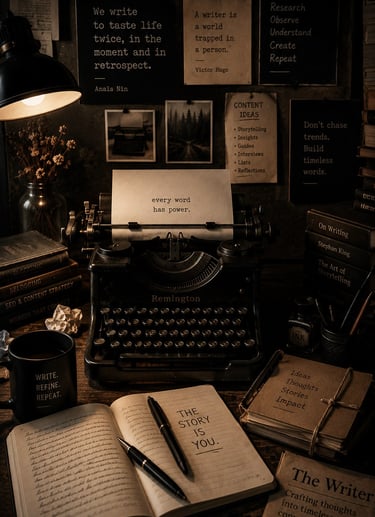
Writers and Bloggers shape how information, ideas, stories, and perspectives are communicated within the digital age. From content writing, blogging, copywriting, and ghostwriting to editorial, research, and long-form storytelling, their work exists across media, publishing, branding, marketing, education, and digital platforms. Operating within an ecosystem driven by audience attention and constant content consumption, writers today are expected to balance creativity with strategy creating work that is not only engaging and original, but also adaptable to platform behaviour, search visibility, and evolving audience preferences.
As the industry becomes increasingly fast-paced and digitally driven, writers and bloggers often navigate challenges surrounding creative ownership, content saturation, inconsistent workflows, changing platform algorithms, and long-term sustainability within freelance and creator-led environments. The rise of AI-assisted tools, SEO-driven systems, and performance-based content culture has further transformed how written work is produced, valued, and distributed. Creators Tribe Bench (CTB) recognises the evolving realities of this space and supports writers in building stronger creative direction, professional awareness, and sustainable systems around their work. By encouraging more intentional workflows, clearer positioning, and deeper understanding of the professional ecosystem surrounding writing and digital publishing, CTB helps creators move toward more stable, purposeful, and professionally aligned growth.
POETS & STORYTELLERS
Poets and Storytellers exist at the heart of human expression transforming emotions, memories, observations, and ideas into narratives that connect deeply across cultures and generations. Once rooted primarily in traditional literary spaces, the role has now evolved across spoken word, digital storytelling, podcasts, live performances, visual narratives, and creator-led platforms. In today’s landscape, storytelling is no longer confined to books or stages it lives across social media, immersive media, independent publishing, and technology-driven ecosystems where personal voice and audience connection hold immense cultural value.
As storytelling continues to adapt to digital behaviour and platform-driven visibility, creators within this space increasingly navigate the balance between artistic authenticity and evolving audience expectations. The rise of AI-assisted tools, short-form content culture, and algorithm-based discovery has transformed how stories are created, distributed, and consumed. Yet beneath this rapid evolution lies the challenge of sustaining originality, ownership, visibility, and long-term creative identity within fragmented digital environments. Creators Tribe Bench (CTB) recognises the changing realities of modern storytelling and supports poets and storytellers in approaching their craft with greater clarity, structure, and long-term direction helping creators preserve the depth of their voice while adapting to the future of narrative expression.


APP AND WEB DEVELOPERS
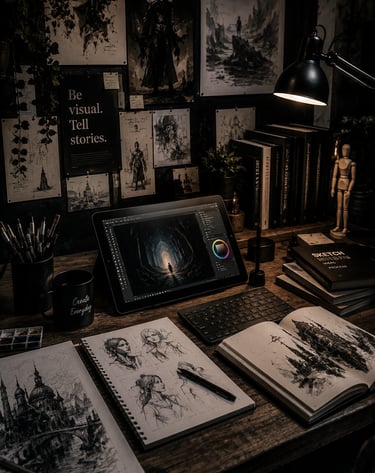
App and Web Developers build the digital systems that shape how people communicate, work, consume, and interact in the modern world. From websites, mobile applications, SaaS platforms, and digital products to large-scale technological ecosystems, developers operate at the centre of innovation and digital infrastructure. Their role extends across front-end experiences, back-end systems, cloud environments, mobile technologies, and scalable architectures balancing functionality, performance, user experience, and problem-solving within rapidly evolving technological landscapes. Whether working within startups, agencies, product teams, or independent ecosystems, developers today contribute far beyond code, playing a critical role in shaping the future of digital interaction.
As technology continues to evolve through AI-assisted workflows, automation, cloud-native systems, and platform-driven ecosystems, developers are expected to constantly adapt while maintaining efficiency, scalability, and innovation. Alongside technical execution comes the challenge of managing fragmented workflows, rapidly changing technologies, unclear project scopes, pricing inconsistencies, platform dependency, and long-term sustainability within fast-moving digital environments. Creators Tribe Bench (CTB) recognises the realities of this evolving tech ecosystem and supports developers in building stronger professional direction, workflow clarity, and sustainable growth systems around their practice. By encouraging more intentional structures, clearer positioning, and deeper understanding of the professional ecosystem surrounding technology and product development, CTB helps developers move beyond scattered execution toward more scalable, stable, and strategically aligned growth.
Frequently asked questions
If we hire a studio to build a digital set for an LED volume shoot, do we own it once we've paid for it?
Not automatically. Payment alone doesn't transfer ownership under Indian copyright law. Ownership stays with the creator unless the contract explicitly assigns or licenses it to you, and the terms of that assignment, especially how long it lasts and what you're allowed to do with it, decide what you actually get.
Is a green screen shoot and an LED volume shoot treated the same way legally?
No. A green screen background is added in post-production and is usually treated as a separate visual effects asset. An LED volume's digital environment exists and is used live, during the shoot itself, which means it needs to be cleared and licensed before filming starts, not after.
We're using motion capture on a performer. Who owns the movement data?
This is genuinely unsettled in Indian law and depends heavily on the contract. The performer holds rights over their own likeness and performance. The studio only owns the resulting digital animation if the contract says so clearly, including whether it can be reused in future projects.
Do we need to register anything to protect a digital set, an installation, or original 3D content we've created?
No. Copyright protection exists automatically the moment original work is created, no registration required. Registration can help as evidence in a dispute, but it isn't what creates the right.
If we license a third-party engine or software tool to build an experience, are we automatically allowed to use it commercially?
Not always. Many tools are licensed for specific uses, and commercial or public-facing use often needs a separate tier of licence. This should be confirmed before a project is built around a tool, not after.
Our Offices
Mumbai-Delhi-Jaipur
Hello@ctbklp.in
+91 7710973726
© 2025. All rights reserved.